











PPWR Applies from 12 August: New Era for Packaging
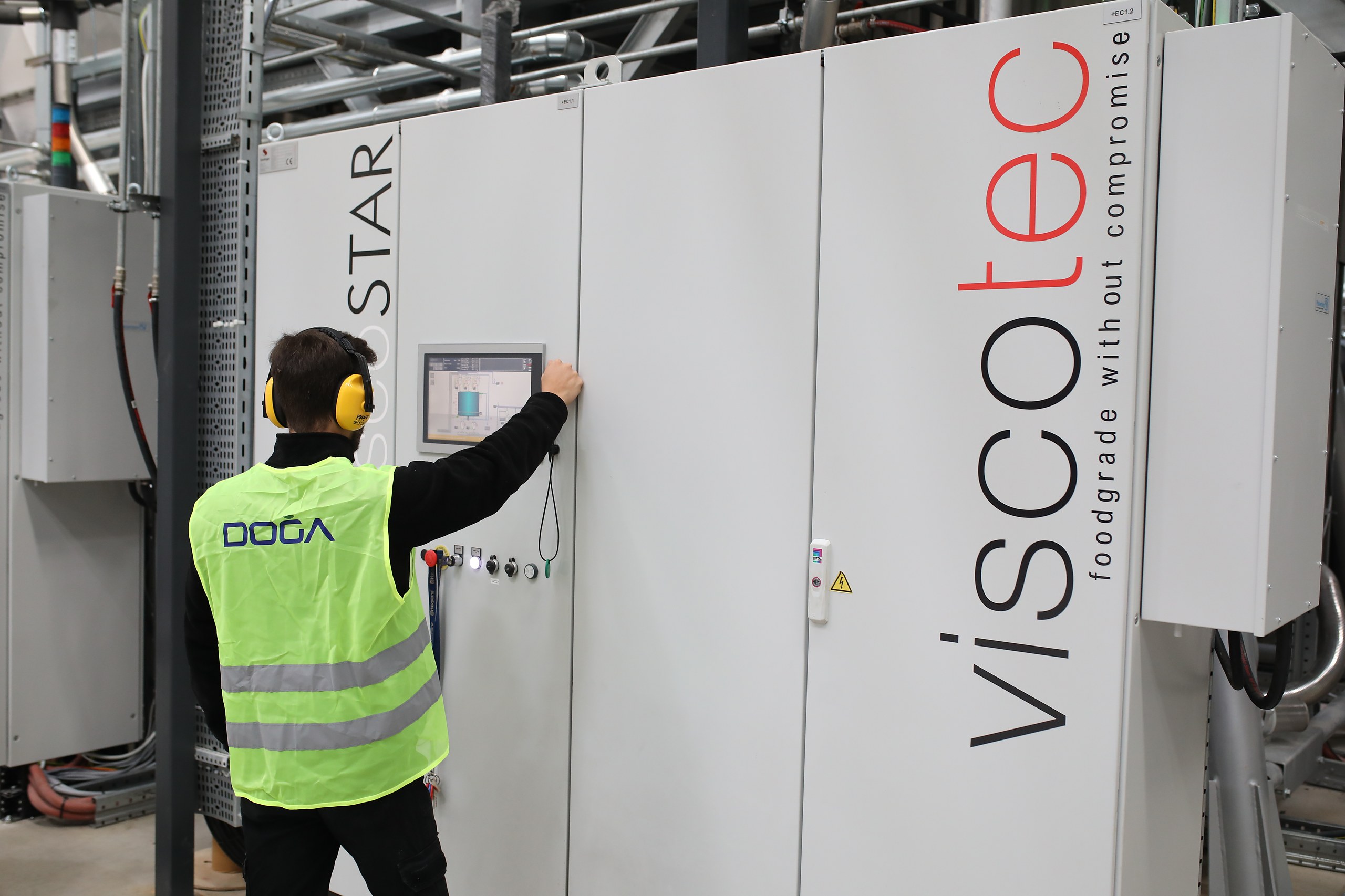
The European Union’s Packaging and Packaging Waste Regulation (PPWR, Regulation 2025/40) entered into force on 11 February 2025. Its eighteen-month transition period ends on 12 August 2026, and the first concrete obligations start applying from that date.
The distinction matters: PPWR is a regulation, not a directive. There is no need for each of the 27 member states to transpose it into national law, so the same rules apply in every country on the same day. For exporters who have been working with country-by-country interpretations, this means both simplification and tightening.
Obligations that apply from 12 August
Technical file and Declaration of Conformity
From this date, manufacturers must keep a technical file and draw up a Declaration of Conformity for every packaging item placed on the EU market. The EU importer must hold a copy of that declaration and be able to provide the technical documentation to market surveillance authorities on request.
One detail deserves attention: whoever has packaging designed or manufactured under their own brand is treated as the manufacturer, regardless of who physically produced it. If your brand is on the box, the conformity assessment and technical file obligation sits with you, not your contract packer.
Substance restrictions
- Heavy metals: the combined total of lead, cadmium, mercury and hexavalent chromium must not exceed 100 mg/kg.
- PFAS: food-contact packaging containing PFAS above defined thresholds cannot be placed on the EU market.
- Substances of concern: packaging must be manufactured so as to minimise substances of concern, including their effect at the waste stage and their environmental impact.
Identification information
The packaging, or in certain cases the documents accompanying it, must carry the name, trademark and contact details of the manufacturer and, where applicable, the importer, together with a type, batch or serial number for the packaging.
Packaging that does not meet these requirements cannot legally be placed on the EU market after 12 August 2026.
The real structural shift comes in 2030
The obligations starting on 12 August are mainly about documentation and chemical content. The threshold that directly concerns the recycling sector is 1 January 2030.
From that date, minimum post-consumer recycled content becomes mandatory in plastic packaging. The rate is 30% for food-contact PET packaging and 10% for other contact-sensitive plastics. By 2040 the target for food-contact PET rises to 50%.
Two points will be decisive in practice. First, the targets can only be met with post-consumer recycled material; production scrap does not count. Second, the rate is calculated as an annual average per manufacturing site, not per individual packaging item.
The Commission must adopt the implementing act setting out the methodology for calculating and verifying recycled content by 31 December 2026. In other words, the answer to “how will this be proven” will become clear by the end of this year.
Movement on the food-contact side too
Regulation 2022/1616, which governs recycled plastics in contact with food, is also going through an amendment process. The draft was notified to the WTO in April 2026 and the public consultation closed on 14 June 2026. The amendment covers Declaration of Compliance requirements and the digital management of the EU Register in particular.
The requirement for an EFSA-authorised process in mechanical PET recycling is not changing. What is changing is the weight of traceability and documentation.
What this means for producers in Turkiye
Every company selling packaging, packaged goods or rPET raw material from Turkiye into the EU is part of this chain. Even when the declaration of conformity obligation sits with the customer in the EU, the data needed to draw up that declaration comes from the supplier.
The short-term actions are concrete:
- Build an inventory of packaging items going to the EU market
- Collect substance and material data from upstream suppliers
- Set up a traceability record capable of documenting post-consumer recycled content
- Compare the 2030 targets against current formulations and calculate the gap
2030 may look distant, but once reformulation, supplier qualification and brand approval cycles are taken into account, the time left to prepare is a matter of a few years.
Where Doga Pet stands
We do not see PPWR as a cost item imposed on the sector, but as a regulation that opens the way for producers who made the right investment. Once recycled content becomes mandatory, the gap between a plant that produces documentable quality and one that does not will show up in price for the first time.
The rationale behind our plant in Kirklareli was built on exactly this scenario:
- All of our input is post-consumer. The 2030 targets can only be met with post-consumer material; production scrap does not count. We have processed post-consumer PET bottles from the start. The full process is described on our recycling process page.
- Food-contact suitability depends on process approval. Our bottle-to-bottle recycling process is approved by the FDA and EFSA for food-contact applications.
- The certification side is ready. Alongside EFSA and FDA we hold GRS, RecyClass, FSSC, REACH, SEDEX and ISO 9001/14001/22000/27001/50001. All of them are listed on our certificates page.
- We can produce the data our customers need. The declaration of conformity and technical file obligation belongs to whoever places the packaging on the market. But the raw material data inside that file comes from us.
One distinction is worth stating plainly: PPWR compliance is the responsibility of the party placing the packaging on the EU market, not of the raw material supplier. Our job is to supply the material that makes that compliance possible, and the data that goes with it.
If you are comparing the 2030 targets against your current formulation and calculating the gap, get in touch.
Sources
- DLA Piper – New EU packaging rules now less than a month away (20 July 2026)
- Latham & Watkins – European Packaging and Packaging Waste Regulation: Summary of Provisions
- Greiner Packaging – Recycled Content in Plastic Packaging: Article 7 of the PPWR
- REACH24H – EU Proposes Amendments to Regulation (EU) 2022/1616