










Bottle-to-Bottle or Fibre? The rPET Feedstock Race
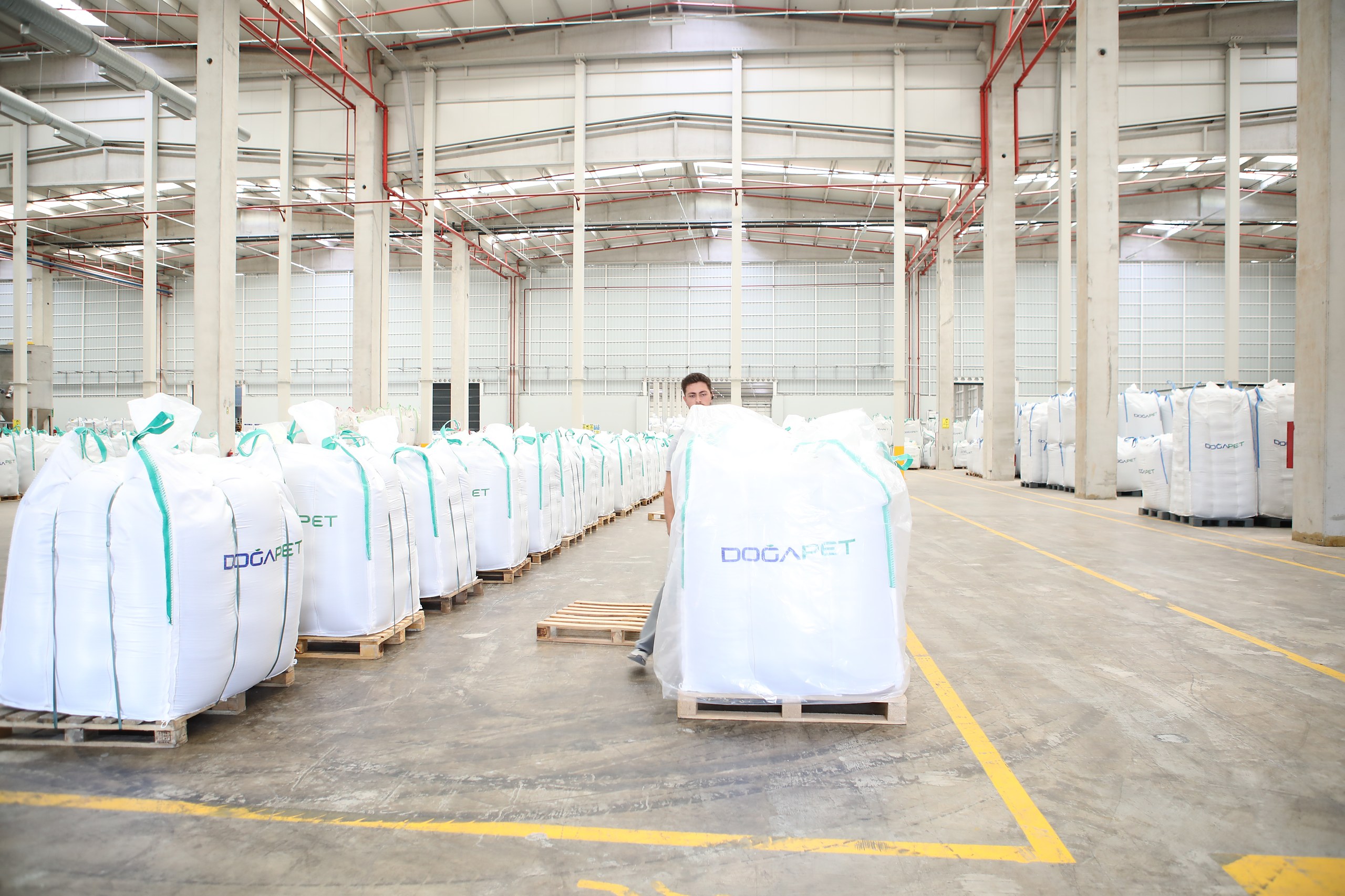
Demand for recycled PET in Europe is at record levels. But the supply chain’s real problem is not demand: two sectors are bidding for the same bale. Packaging wants food-grade rPET; textiles are looking for cost-effective flake for fibre. In 2026 that competition has become the most visible fault line in PET recycling.
The Market Is Growing; the Input Is Not Growing as Fast
According to market research, recycled PET volume rises from 8.22 million tonnes in 2025 to 8.78 million tonnes in 2026, with 12.42 million tonnes expected by 2031. The European PET packaging market stands at around USD 18.27 billion for 2026, with annual growth projected at roughly 5.8%.
The real issue here is not the growth rate but where the input will come from. Post-consumer bottle collection rates vary from above 90% to below 30% depending on the country. So while rPET demand multiplies, the flow of bottles entering the system does not rise by the same factor. The gap lands directly on price and lead time.
Collection is also uneven in a way that averages hide. A country with a mature deposit system delivers a clean, uniform stream year-round; one relying on kerbside collection delivers a mixed stream whose quality moves with the season and the sorting plant. Two bales with the same nominal origin can therefore carry very different yields, and a recycler prices that difference in.
Why Bottle-to-Bottle Moved Ahead
Bottle-grade rPET today accounts for 45-55% of total consumption by volume. Fibre grade stays in the 25-30% band. Regulation shaped this picture to a large extent: the EU set recycled content thresholds for PET beverage bottles of 25% for 2025 and 30% for 2030.
The difference is this: for a packaging producer, food-contact rPET is not a preference but a legal obligation. A fibre producer works on thin margins and depends on a low-cost, stable stream. When both sides bid for the same bale, the side under a mandate wins the price competition.
There is an asymmetry in what each side can pass on, too. A beverage brand can absorb a higher resin price across a product whose packaging is a small share of shelf price. A fibre producer selling into commodity textile chains usually cannot. That asymmetry, not sentiment about sustainability, is what decides where a bale ends up.
Is the Fibre Side Being Squeezed Out?
No — but the playing field is changing. For many years the fibre side was the main buyer of post-consumer bottles; now it drops to second place in the queue. The fibre industry has to turn to non-food streams, coloured flake and alternative feed sources. That means more investment in collection, sorting and washing infrastructure. Sorted products such as Mix Flakes for applications with no colour sensitivity and Green Flakes for coloured production fill exactly this gap.
Two other routes are opening at the same time. Thermoformed trays and sheet scrap are being developed as a feedstock in their own right, and textile-to-textile recycling is moving from pilot scale towards commercial volumes. Neither replaces bottle flake at today’s prices, but both reduce the fibre sector’s dependence on a stream it no longer wins on cost.
What the Price Spread Tells You
In the past, the rPET price largely tracked virgin PET. That link is weakening. The gap between mandated recycled-content targets and available supply looks set to create a structural premium in food-grade rPET at least until 2030. In other words, food-grade material may not get cheaper even if oil prices fall.
Germany, the UK, France and Italy stand out in this picture; mature deposit systems have taken them to high collection rates. In markets with weak collection infrastructure the gap widens further. The result: a producer with access to clean, documented input moves into an increasingly strategic position.
Where Does Turkey Sit in This Equation?
Turkey has long been one of Europe’s rPET suppliers. But competition now runs on certification and consistency, not price alone. A brand looking for food-contact rPET expects EFSA and FDA compliance, traceability records and stable batch-level specifications from its supplier.
Doğa Pet’s Kırklareli plant answers that demand with scale: 120 tonnes of PET flakes and 90 tonnes of rPET granules per day. On the TOMRA sensor-based sorting lines, polymer purity is held at 99.8% and colour deviation below 0.5%. On an annual scale that means more than 40,000 tonnes of flakes and more than 24,000 tonnes of granules.
Proximity matters alongside scale. Thrace sits next to the EU border, which shortens transit times and keeps freight cost per tonne low relative to suppliers shipping from further afield — a practical advantage when a filling line needs resupply on a fixed schedule rather than a single large delivery.
The Practical Takeaway for Buyers
- Contract early. The structural gap in food-grade rPET looks set to last until 2030; spot buying is risky.
- Ask for the right grade. Not every application needs food grade. For sheet, strapping and industrial uses, rPET Resin NFG lowers cost.
- Split your volume by grade. Buying everything at food grade because part of the range needs it is a common and expensive habit.
- Ask for documentation up front. For food-contact applications, with products meeting EFSA/FDA requirements such as rPET Resin FG and PET Flakes, documentation should be discussed before the contract, not after delivery.
How Contracts Are Changing
Purchasing terms are adapting to the shortage as much as prices are. Annual volume commitments with staged deliveries are replacing purely opportunistic buying, and index-linked pricing is increasingly used so that neither side is betting on a single number twelve months out. Where supply is genuinely tight, buyers are also securing capacity rather than tonnes — an agreed share of a line’s output, which is a different conversation from a spot enquiry and one that suppliers can plan around.
For the fundamentals: what is rPET? and how is rPET quality measured?