









What the New Deposit System Means for Turkish rPET
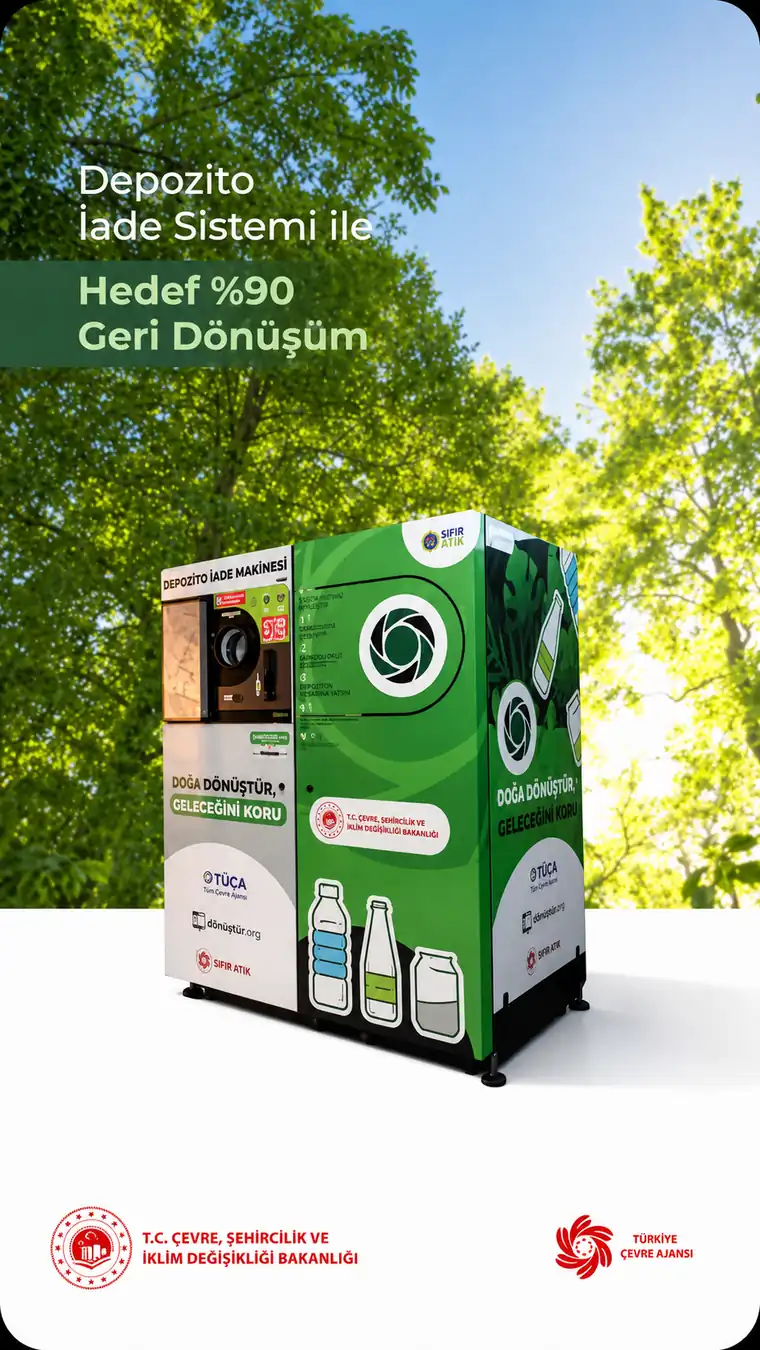
The Deposit Return System (DOA) went live across 81 provinces and 973 districts in Turkiye on 1 July 2026. Consumers receive 1 TL for every eligible beverage container they return. The Turkish Environment Agency aims to bring roughly 25 billion containers a year into the recycling chain.
The system is only five weeks old. Expecting a measurable change in any plant’s input quality over that period would not be realistic. But we can already talk about what to expect, based on how the system is designed and on international precedent.
Because the real issue is not volume, contrary to most of the coverage. At the Sakarya storage and counting centre, daily PET collection rose from 200 to 600 kilograms after 1 July. That is good news, but from a plant’s perspective the more valuable expectation lies elsewhere: deposit systems do not only collect more PET, they collect cleaner PET.
Why deposit-collected bottles are expected to arrive cleaner
They never travel in a mixed stream
In conventional collection, a PET bottle moves in a single stream together with paper, glass, organic waste and metal. It stays in contact with all of them until separation at the sorting facility, arriving with paper fibre, glass dust and food residue on its surface.
A bottle placed into a reverse vending machine never makes that journey. It arrives on its own, in its own stream.
International data shows the gap clearly. In countries with a deposit system, PET bottle collection averages 94%, against around 47% for kerbside programmes. In California in April 2025, post-consumer PET bales from the deposit system were worth 88% more than PET from the kerbside programme. That price gap is the direct monetary expression of the difference in contamination and yield.
Material identity is known from the outset
The machine accepts a container only after verifying its security barcode, so every container entering the system is on record. That is expected to reduce the share of unexpected polymers reaching the sorting line.
Bottles wait less
A deposit is an incentive. Consumers do not keep the container at home for long when money is attached to returning it. Shorter dwell time means less degradation from sun and humidity, and less drying-on of product residue.
Why this matters for Turkish rPET producers
If the expectation holds, the winner is not one company but the whole sector. The reason is timing.
Turkiye’s rPET exports go mainly to Europe, and demand on the European side is tightening. Under PPWR, from 2030, food-contact PET packaging must contain 30% post-consumer recycled content, and that share can only be met with post-consumer material.
So what European buyers will be looking for over the coming years is clear: food-contact grade rPET with high purity that is documentable as to origin. The deposit system has the potential to give Turkish producers an advantage on all three counts:
- Cleaner input means material that leaves the wash line with less loss and generates fewer rejects in optical sorting. Line yield rises.
- Higher output purity opens the door to premium applications such as bottle-to-bottle and filament-grade textile, which command higher prices.
- Digital records: because the DOA system logs containers before handing them to authorised operators, it creates a traceable collection chain. Documenting a post-consumer content claim becomes easier.
In short: Turkiye’s feedstock base is improving just as European demand shifts in exactly that direction. That overlap is a clear opportunity for Turkish rPET producers.
But clean input alone is not enough
This is the critical part. A better raw material still ends up as a lower-value product without the sorting and granulation infrastructure to recover it at properties close to virgin. Input quality raises the ceiling; the plant determines who reaches it.
At our plant in Kirklareli the targets are clearly defined: 99.998% purity on the polymer side, and on the colour side bringing the share of unwanted colours, light blue included, below 1%. As it stands, colour variance is under 0.5%.
Those levels are the result of investment in sorting. Four TOMRA AUTOSORT units pre-sort bottles by material and colour. After grinding, washing and drying, two INNOSORT FLAKE and two AUTOSORT FLAKE units separate colour, polymer and metal contaminants at flake level. The sorted flake becomes food-grade rPET granulate on two Starlinger recoSTAR PET 165 HC iV+ lines. The full sequence is on our recycling process page.
On the documentation side, alongside the EFSA- and FDA-approved process, our GRS and RecyClass certificates back the post-consumer content claim with independent audit. For textile buyers in particular, GRS is usually the first document requested.
What to watch from here
As the system matures, the questions worth answering are: where will collection rates settle, through which channels and in which quality grades will DOA material reach recycling plants, and how will bale prices separate from conventional collection.
We will be tracking these and will share them with data. What is clear for now: Turkiye’s post-consumer PET base is growing and becoming more traceable, exactly as European demand tightens in that direction.
For samples and technical data, get in touch.