










EU 2030 Recycled Content Rules — Doğa Pet
Two EU Laws, One Direction: More Recycled Content, Faster
European buyers of PET packaging are now working against two overlapping deadlines. The EU Single-Use Plastics Directive (Directive (EU) 2019/904), Article 6(5), already requires that PET beverage bottles placed on a Member State’s market contain, on average, at least 25% recycled plastic from 2025 and at least 30% from 2030. The newer Packaging and Packaging Waste Regulation, Regulation (EU) 2025/40 (“PPWR”), published in the Official Journal on 22 January 2025 and applying from 12 August 2026, goes further and covers more categories of plastic packaging, not just beverage bottles.
The two instruments measure compliance differently — the SUP Directive as a Member State average, PPWR as a per-manufacturing-plant annual average — but the direction is the same: recycled content stops being a marketing claim and becomes a compliance line item.
The PPWR Numbers Buyers Need in Their Spec Sheets
Article 7 of Regulation (EU) 2025/40 sets minimum recycled-content thresholds for plastic packaging placed on the EU market, calculated as an average per manufacturing plant per year, recovered from post-consumer plastic waste:
- By 1 January 2030: 30% for contact-sensitive PET packaging (excluding single-use beverage bottles); 10% for contact-sensitive packaging made from plastics other than PET; 30% for single-use plastic beverage bottles; 35% for other plastic packaging.
- By 1 January 2040: 50% for contact-sensitive PET packaging; 25% for contact-sensitive non-PET packaging; 65% for single-use plastic beverage bottles; 65% for other plastic packaging.
For a brand owner sourcing PET Flakes, Mix Flakes, or rPET Resin, this is no longer a 2030 problem to solve later — plants that want to hit a 2030 annual average need contracted, traceable rPET volume locked in well before that date, because supply doesn’t scale overnight.
Recycled Content Has to Be Provable, Not Just Claimed
Both regulations assume the recycled percentage can be verified, not estimated. The reference framework is EN 15343, the European standard that specifies the traceability procedures for recycled plastics and the calculation basis for recycled content. RecyClass built its Recycled Plastic Traceability Certification on top of that standard — a recycler seeking the certification must source from suppliers that are themselves certified in line with EN 15343, creating a traceable chain from post-consumer bale to finished flake or resin.
For a buyer, this means the paperwork behind a shipment matters as much as the shipment itself: mass-balance records, input-bale traceability, and a recycling-process certification that maps to EN 15343 are what turn a recycled-content percentage from a claim into evidence a customs or market-surveillance authority will accept. Doğa Pet’s certification scope — covering GRS and RecyClass alongside our quality management system — is documented on our certificates page.
Food-Contact rPET Has Its Own Rulebook
For bottle-to-bottle applications, Commission Regulation (EU) 2022/1616 governs recycled plastic materials intended to come into contact with food, replacing the older Regulation (EC) No 282/2008. It covers all recycling technologies, not only mechanical recycling, and requires that the recycling installation and its decontamination process be authorised and entered in an EU register, with EFSA input on the safety of the decontamination step. A buyer specifying food-grade rPET should be able to ask a supplier for the registration status of the specific process used to produce that resin — not just a generic food-contact claim. Doğa Pet’s rPET Resin FG is produced for exactly this use case, with documentation available on request.
The Supply Side Is Not Keeping Pace
The regulatory targets assume the recycled material will be there. The market data says otherwise. Across PET specifically, the 2022 PET Market in Europe report (Petcore Europe / Plastics Recyclers Europe / UNESDA / EFBW / ICIS) put the EU’s average recycled content in PET beverage bottles at 24% — already behind the 2025 SUP Directive threshold of 25% as a bloc-wide starting point, let alone the 30% due in 2030. Installed EU PET recycling capacity was around 3 million tonnes, of which only 1.4 million tonnes serve food-contact applications.
Plastics Recyclers Europe’s most recent industry-wide data (November 2025) shows the picture getting harder, not easier: total European plastics recycling capacity reached 13.5 million tonnes in 2024, well below the roughly 6% annual growth PRE says is needed to meet the PPWR targets, with nearly 1 million tonnes of capacity lost over three years to plant closures. PET and polyolefin films each accounted for 25% of those 2023–2024 closures, and PRE points to a surge of low-priced, unregulated recycled-plastic imports as a driving factor, alongside calls for trade and market-defence measures.
For buyers, the closure trend also reframes where feedstock comes from. Türkiye sits inside the EU customs union for industrial goods and within short sea and road distances of the Mediterranean and Central European ports that PET converters already use, which shortens the lead time between placing an order and having certified flake or resin on the production line — relevant when European capacity itself is shrinking rather than growing.
What This Means for a European Buyer Today
Three practical takeaways follow from the numbers above:
- Contract early, not in 2029. If a 2030 annual-average target applies to your plant, the recycled-content volume needs to be under contract well before the deadline — capacity is contracting, not expanding, at the rate the regulation assumes.
- Ask for the certificate, not the claim. Request EN 15343-aligned traceability documentation and RecyClass or GRS certification scope directly, and check that it covers the specific product code you are buying, not just the supplier’s general portfolio.
- Treat origin as a compliance question, not just a cost question. With PRE flagging import pressure as a factor in European capacity closures, a supplier’s ability to document EU-based, traceable post-consumer feedstock is becoming as relevant to due diligence as price.
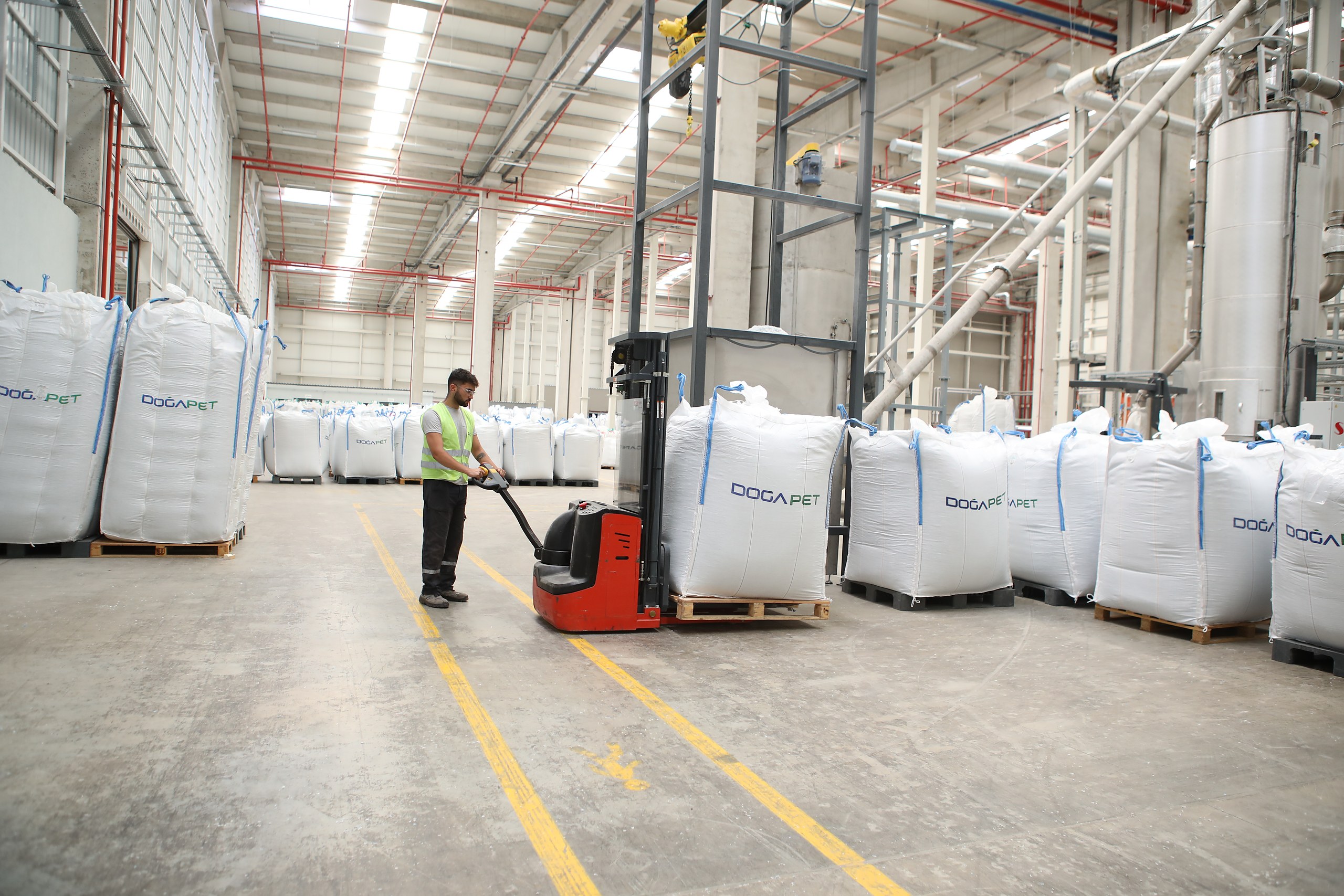
Doğa Pet processes post-consumer PET bottles collected in Türkiye into PET Flakes, Mix Flakes, Green Flakes, rPET Resin FG and rPET Resin NFG under GRS and RecyClass-aligned traceability, with EN 15343-based documentation available for every shipment. If your 2030 compliance plan still has a gap in contracted recycled-content volume, that is the conversation worth having now rather than in the year the target applies.